
5 Best Sustainable Materials You Did Not Know Were Hiding in Your Home
- Pankhuri
- No Comments
- 8 mins read
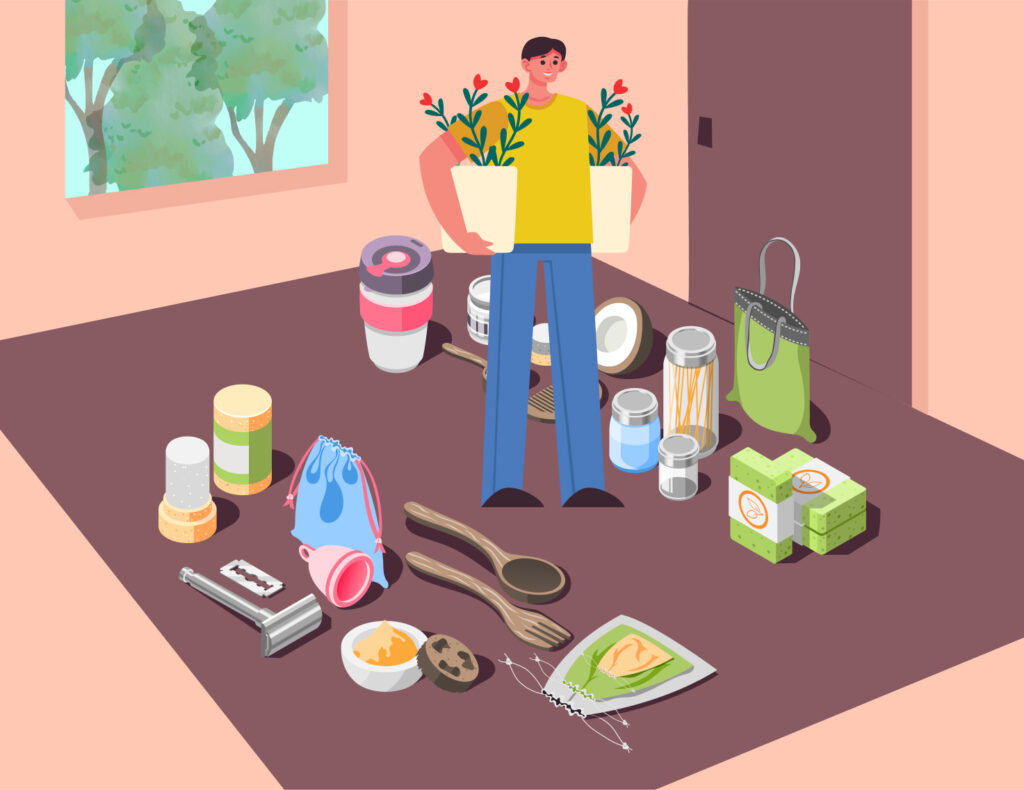
Right now, somewhere in your home, there is a material that has been used in India for thousands of years, and there is a very good chance you walked past it this morning without even giving it a little attention.
To become sustainable, you don’t have to start from scratch buying new materials; it starts with your home, with recognising what has always been around you.
We have put together this list for every Indian household that wants to make more conscious choices without turning their life upside down. These five materials are deeply rooted in our soil, our culture, and our everyday routines, until they were not. But don’t you worry; we are not just giving you the materials; we are also providing you ways to use them.
1. Bamboo
The first on the list we have is Bamboo. You have almost certainly seen it growing wild along a road, a river bank, or the edge of a farm. In many Indian states, it is so common it barely gets noticed. But bamboo is one of the most extraordinary materials on the planet.
It is technically a grass, which means it regrows after being cut without needing to be replanted. Some species grow up to a metre a day.
Wanna know a wild fact? It produces more oxygen than most trees and absorbs significantly more carbon dioxide.
Exactly what we need today
How to use it at home:
If you have old bamboo mats, baskets, or any furniture sitting in storage, bring them back out. Make bamboo ladoo boxes and storage containers; they are genuinely functional and far longer lasting than any plastic alternatives you will find.
You can also switch your plastic kitchen utensils for bamboo ones gradually, starting with spatulas, ladles, and cutting boards. Bamboo toothbrushes are now widely available online and in local organic stores across India, and they are an easy swap that costs almost nothing extra. If you have a balcony or a small garden, bamboo screens make excellent natural privacy dividers that actually improve with age.
2. Jute
Before plastic bags existed, India ran on jute. Today we are bringing back The golden fibre, as it has long been called. Jute once made its way into every market, every home, every warehouse in the country. Then plastic washing happened, and jute was just forgotten.
We think it is time to invite it back in.
Jute is fully biodegradable! It grows in just four to six months with very little need for fertiliser or pesticides. It is a carbon-sequestering crop, meaning the plant actively pulls carbon out of the atmosphere while it grows, and the material itself is incredibly versatile. Compare it to the plastic you use; you will not find anything much better than jute, which can replace plastic easily
How to use it at home:
We know we are being obvious, but still most don’t do this: replace the plastic carry bags you keep under the kitchen counter with jute bags. Keep a couple folded near the door so you always remember to carry them with you to the market.
Jute storage baskets work beautifully for organising everything from vegetables in the kitchen to toys in a child’s room. Old jute sacks, which you can still find in many mofussil towns and agricultural areas, can be repurposed into planters, doormats, or even wall art with minimal effort.
For those of you who enjoy a bit of home decor, jute rope is excellent for wrapping plain pots, creating shelf organisers, or making simple wall hangings that look handmade because they are.
This one is a super functional material which NEEDS TO BE BROUGHT BACK!!
3. Coconut Shell and Husk
Walk through any South Indian kitchen, any Kerala household, any coastal market, and you will find coconut shells being discarded by the dozen. Now, that is a lot of material going to waste when it could be doing something genuinely useful.
The coconut is one of those rare plants where almost nothing needs to be thrown away. The shell is dense, hard, and naturally antibacterial. The husk, that thick fibrous layer between the shell and the outer skin, is what becomes coir. Both are completely natural and break down fully without harm. That is why it is also called ‘Tree of Life’
How to use it at home:
Coconut shell bowls and spoons have been used in South Indian households for generations and are now being made beautifully by artisans across Kerala, Tamil Nadu, and Karnataka. If you already have coconut shells at home, clean them thoroughly and use them as small planters for herbs on your windowsill. They hold moisture well and look wonderful on a kitchen shelf.
Coir doormats, which your grandmother almost certainly had at the front door, are the most natural option for keeping dirt outside. Coir rope is incredibly useful in the garden for tying plants and supporting climbing vegetables, and if you compost, dried coconut husk breaks down wonderfully and improves soil texture significantly.
4. Terracotta
Before steel came along, terracotta was the material Indian households relied on for everything from water storage to cooking. Matkas kept water cool without electricity; drinking water from them is a childhood memory that we can just never forget. Handi vessels slow-cooked food in ways that preserved nutrients and deepened flavour, and just how beautifully! All of it came from the earth and went back to the earth.
Terracotta is simply fired clay. It requires no industrial processing, no synthetic chemicals, and no complex supply chains. The raw material just is soil. The craftspeople making it are potters whose families have worked this tradition for generations.
How to use it at home:
A terracotta or matti matka on the kitchen counter or balcony gives you genuinely cool drinking water through the summer without spending a single extra rupee on electricity.
Terracotta pots are the most breathable containers for plants and far better for root health than plastic ones. If you are replacing any pots, start with terracotta, and you will notice the difference in how your plants grow.
Terracotta cookware, especially for slow dishes like dal, khichdi, and biryanis, imparts an earthiness that simply cannot be replicated in a non-stick pan. It takes a little getting used to but quickly becomes something you protect with care.
5. Banana Fibre
This one genuinely surprises most people. When a banana plant finishes fruiting, the trunk is typically cut down because it does not fruit again from the same shoot. That trunk, and the layers of leaf sheath wrapped around it, contain strong, silky fibres that have been used in parts of South India, Sri Lanka, and Japan for centuries. In Tamil Nadu and Kerala, artisans have long woven banana fibre into mats, bags, and ropes. Today it is also being used to make paper, textiles, and packaging.
The process of extracting banana fibre is low-impact. The plant requires no additional growing, because it is essentially agricultural waste that gets a second life.
How to use it at home:
If you live in a banana-growing region or know a farmer who does, banana fibre products are often available at local craft fairs and women’s self-help group markets. Look for banana paper notebooks, which are increasingly available through sustainable stationery brands in India. They write beautifully and last far longer than regular paper. Banana fibre bags are strong, water-resistant to a degree, and carry the warmth of being made by hand. If you practise any kind of home composting, dried banana leaves and stem pieces break down quickly and add potassium to your compost pile. Banana fibre is proof that what we call waste is often just a resource we have not yet learned to see properly.
How can we help you?
Hello!!! We are Wibhoo, and everything you just read is what we are building around.
The reason we exist is exactly this: there are incredible local artisans, small businesses, and eco-social entrepreneurs across India who work with bamboo, jute, terracotta, coconut, banana fibre, and dozens of other natural materials every single day. They make things with care and intention. And for a long time, finding them required knowing exactly where to look, which market to visit, and which state to travel to.
We wanted to change that.
On Wibhoo, you can find these eco-friendly products much more easily without doing two-factor authentication, because we authenticate at the first step for you.
We built Wibhoo to make it easier for you to find these things without having to search endlessly.
Conclusion
Sustainable living in India is not a foreign concept dressed up in green packaging. It has been here all along; we have just lost our way with all the green-washing around. We are just helping you find your way back to it.
The next time you finish a coconut, do not throw the shell right away; the next time you see bamboo growing by the road, notice it. The next time you walk past a clay pot at a local market, pick it up and feel how it has been made. Your little intentional actions secure our beautiful planet.